Titration Sleep Study
An overnight study that finds the exact CPAP or BiLevel pressure that keeps your airway open comfortably — for patients who already have a confirmed Sleep apnea diagnosis.
What does titration mean?
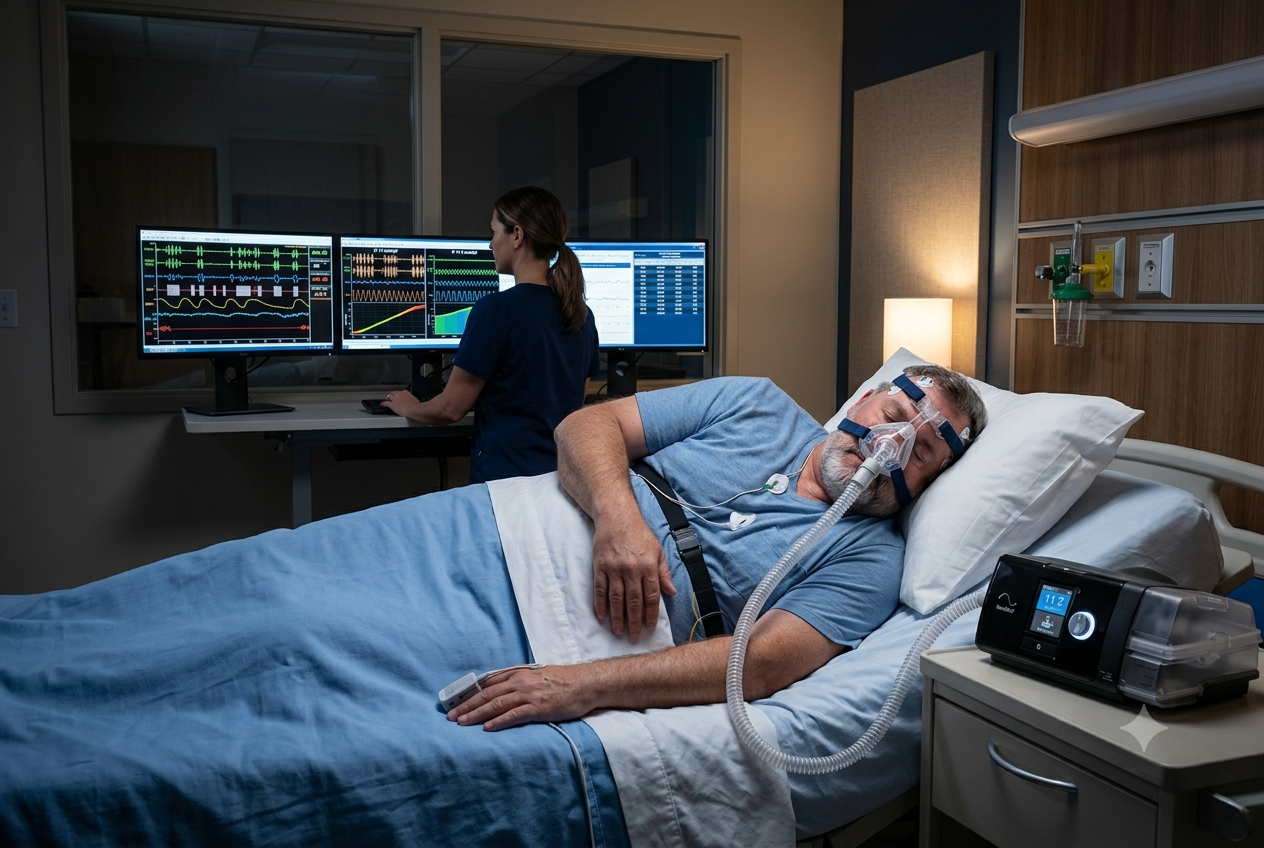
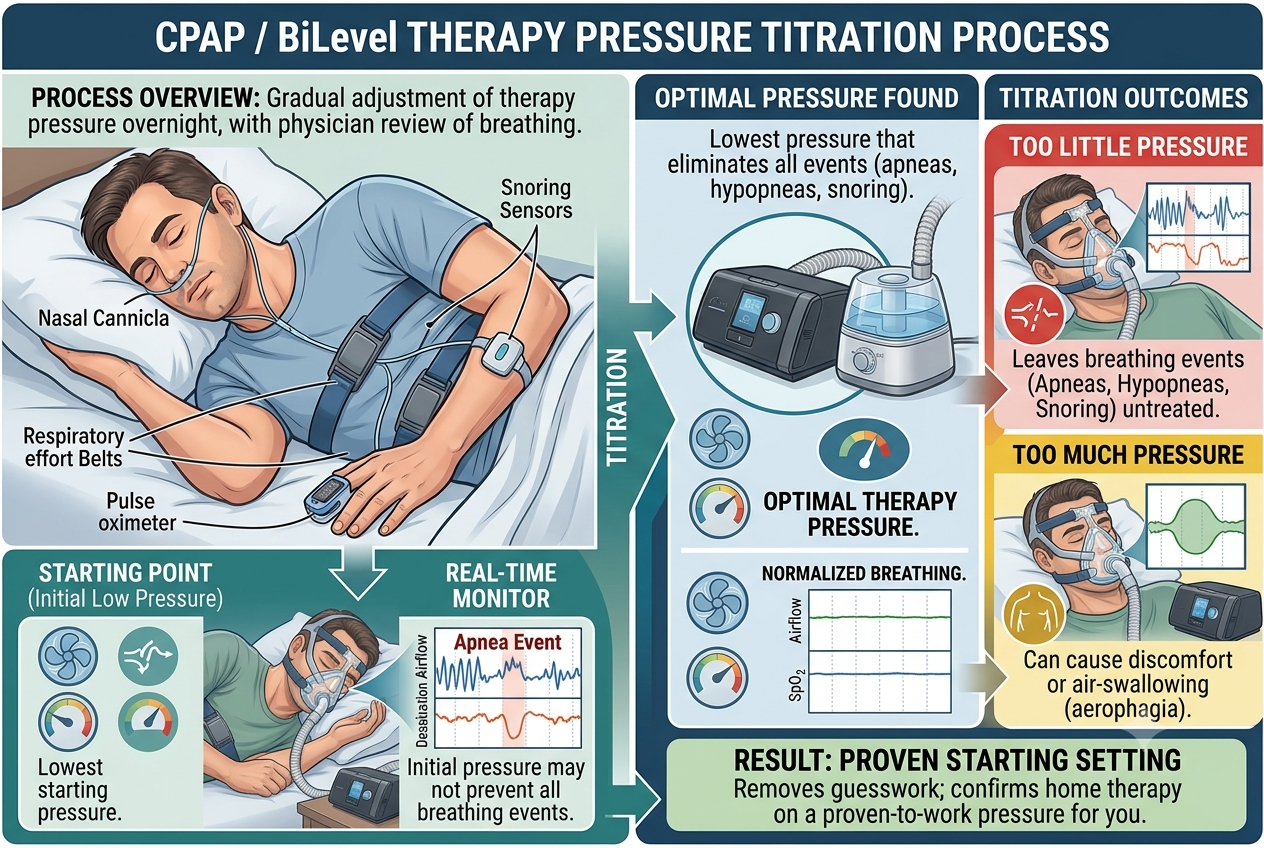
Titration is the process of gradually adjusting your CPAP or BiLevel therapy pressure overnight while a sleep physician reviews how your breathing responds, until they find the lowest pressure that eliminates apneas, hypopneas, and snoring.
Too little pressure leaves breathing events untreated; too much can cause discomfort or air-swallowing. This study removes the guesswork so you start home therapy on a setting that's already been proven to work for you.
Already diagnosed?
Rent a CPAP or BiPAP Machine — No Big Upfront Cost
Flexible monthly rentals with free delivery, setup, and ongoing support, so you can start therapy right away.
When to book a titration study
First-time CPAP setup
You've just been diagnosed with Sleep apnea and need an initial pressure setting before starting therapy.
Symptoms returning
Weight change or persistent symptoms suggest your current pressure setting may no longer be right.
Moving off auto-CPAP
You're switching from an auto-adjusting machine to a fixed-pressure device and need that number confirmed.
Complex Sleep apnea
Your case involves central apnea or hypoventilation and may need BiLevel rather than standard CPAP.
1-Minute Sleep Quiz
Answer a few quick questions to see whether a sleep test could be worth exploring. This is not a diagnosis.
How titration night works
Baseline setup
Sensors track your breathing, oxygen, and sleep as you fall asleep on a low starting pressure.
Gradual adjustment
Pressure is increased in small steps whenever breathing events appear, tracked continuously through the night.
Optimal setting found
The physician identifies the lowest pressure that resolves apneas, hypopneas, and snoring comfortably.
Report & prescription
You receive your confirmed pressure setting, ready to program into your CPAP or BiLevel device at home.
CPAP vs. BiLevel
Your titration study also determines which therapy mode is right for you.
| Signal during titration | CPAP is usually enough | BiLevel may be recommended |
|---|---|---|
| Response to a single pressure | Breathing normalizes | Events persist even at higher pressure |
| Comfort at required pressure | Well tolerated | High pressure causes discomfort or air-swallowing |
| Breathing pattern | Primarily obstructive events | Central apnea or hypoventilation present |
| Typical next step | Standard CPAP prescription | BiLevel with separate inhale/exhale pressures |
Already diagnosed?
Rent a CPAP or BiPAP Machine — No Big Upfront Cost
Flexible monthly rentals with free delivery, setup, and ongoing support, so you can start therapy right away.
Titration study questions
Yes — a titration study assumes Sleep apnea has already been confirmed, typically through a Home Sleep Apnea Test, Polysomnography, or a Split-Night Study. A diagnostic study determines whether you have a sleep disorder in the first place; a titration study is done afterward purely to find the right PAP pressure. If you haven't been diagnosed yet, start there first.
It's performed in a single overnight session. The exact duration depends on how quickly your sleep physician can identify the appropriate pressure and whether additional adjustments are needed during the night.
Yes — if you haven't been diagnosed yet, our Split-Night Study combines diagnosis and titration into a single night instead of two separate visits.
Yes — you'll typically wear a CPAP or other PAP mask while sleeping. Pressure starts low and increases gradually as the technician monitors your breathing and adjusts settings through the night.
Most people tolerate it well. The mask may feel unusual at first, but the sleep technician can help adjust the fit and settings throughout the night, and we provide mask-fit guidance beforehand to help you get comfortable before pressure ramps up.
You'll sleep with monitoring sensors attached to your body while wearing a PAP mask. The technician tracks your breathing, oxygen levels, snoring, and other signals throughout the night, adjusting the pressure in small steps to find the most effective setting.
There's no fixed schedule, but it's worth considering after significant weight change, if symptoms return despite using therapy consistently, or if your current settings were never formally confirmed.
If the night doesn't provide enough information to confirm an effective pressure, your doctor may recommend a repeat titration study, an alternative titration approach, or additional evaluation.
The study helps determine the appropriate therapy type and settings based on your breathing patterns and how you respond to pressure. Your sleep specialist makes the final treatment recommendation based on the results and your overall condition — see our CPAP vs. BiLevel comparison above for the signals that typically point either way.
A sleep specialist reviews your results and confirms the recommended PAP therapy and settings. Your report includes the confirmed pressure, which can be programmed into your own CPAP or BiLevel device, or used when arranging one through a supplier of your choice.
What early users are saying
Illustrative feedback shared for demonstration purposes.
Related studies
Home Sleep Apnea Test (HSAT)
Not diagnosed yet? Start with the screening-level test before booking titration.
Split-Night Study
Combine diagnosis and titration into a single night if you haven't been tested before.
Polysomnography at Home
Want a comprehensive baseline study alongside your therapy setup? Consider full home PSG.