Narcolepsy Evaluation
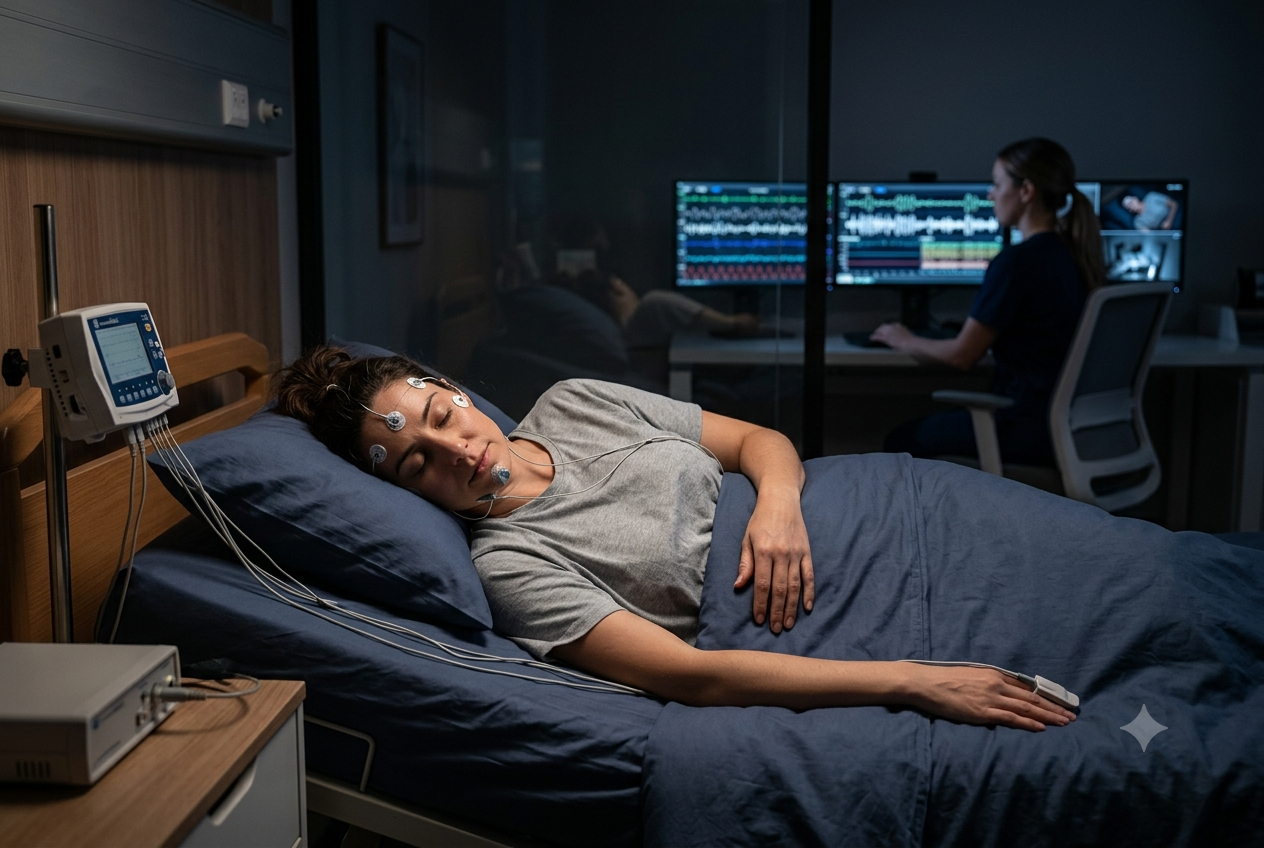
An overnight sleep study (PSG) followed by a next-day nap study (MSLT) to evaluate excessive daytime sleepiness and assess for narcolepsy.
Why two tests?
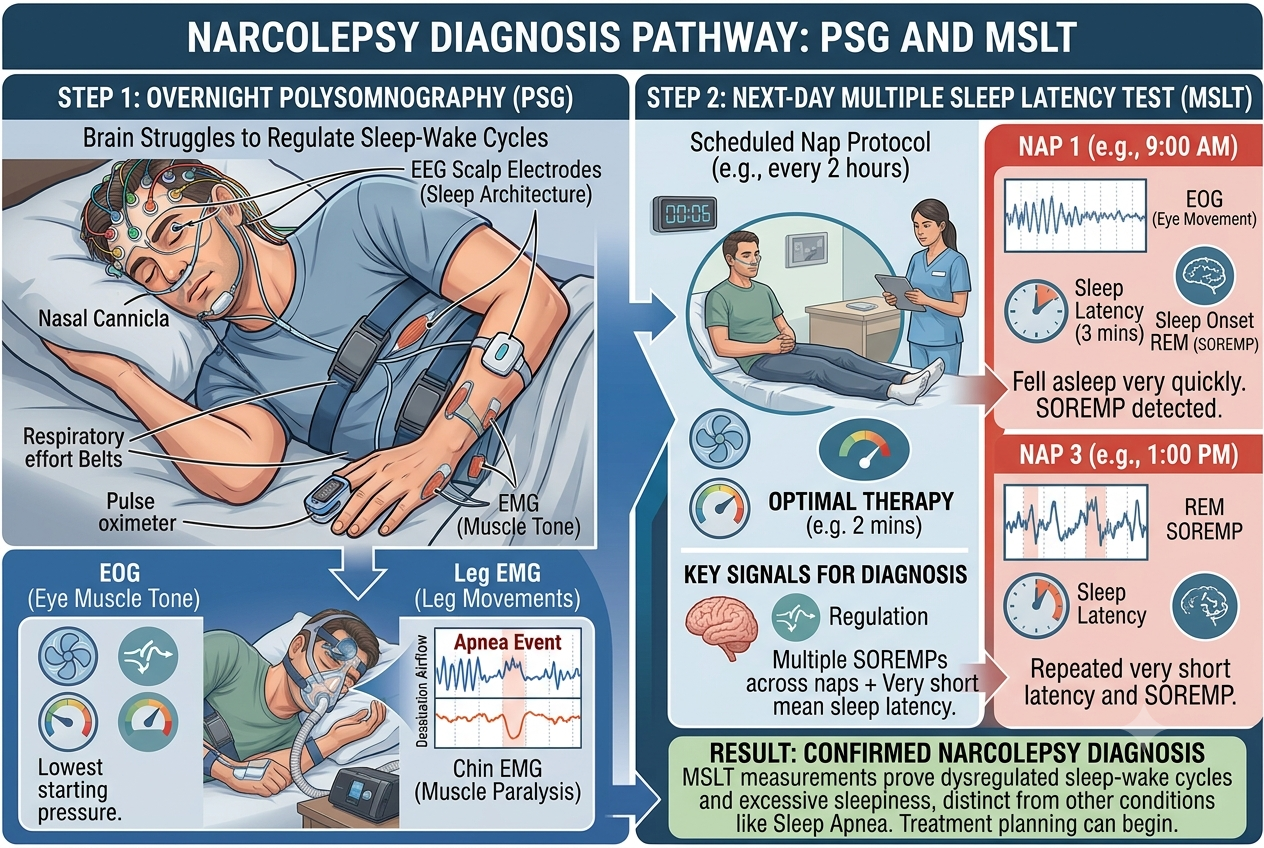
Narcolepsy is a neurological condition where the brain struggles to regulate sleep-wake cycles, causing excessive daytime sleepiness, sudden sleep attacks, and in some cases cataplexy, hallucinations, or sleep paralysis.
Confirming it takes two steps: an overnight Polysomnography (PSG) first rules out other causes of sleepiness, like Sleep apnea. The next day, a Multiple Sleep Latency Test (MSLT) measures how quickly you fall asleep across several scheduled naps — the key signal for a narcolepsy diagnosis.
Already diagnosed?
Rent a CPAP or BiPAP Machine — No Big Upfront Cost
Flexible monthly rentals with free delivery, setup, and ongoing support, so you can start therapy right away.
Common symptoms
Excessive daytime sleepiness
Falling asleep suddenly at work, school, or even while driving, despite a full night's sleep.
Sudden muscle weakness
Cataplexy — knees buckling or dropping objects, often triggered by laughter or strong emotion.
Vivid hallucinations
Dream-like experiences when falling asleep or waking, distinct from ordinary dreams.
Sleep paralysis
Brief inability to move for seconds to minutes while falling asleep or on waking.
1-Minute Sleep Quiz
Answer a few quick questions to see whether a sleep test could be worth exploring. This is not a diagnosis.
How the evaluation works
Overnight PSG
Sensors record brain waves, breathing, oxygen, heart rhythm, and movement overnight to rule out other causes of sleepiness.
Morning handoff
After a full night's data is confirmed, you're prepared for the daytime nap protocol — no caffeine beforehand.
MSLT nap protocol
Starting about two hours after waking, you're offered up to five scheduled 20-minute nap opportunities across the day.
Combined report
Both nights of data are scored together and reviewed by a sleep physician to confirm narcolepsy or identify another cause.
Why the nap test can't be done at home
The MSLT portion needs brain-wave (EEG) sensors and a controlled, quiet, distraction-free room between naps to produce a reliable result — conditions that are difficult to replicate outside a monitored clinic. Because of this, we arrange the daytime nap study at a partner sleep lab, immediately following your overnight recording. Every other part of this evaluation, including the overnight PSG, can be completed at home.
Already diagnosed?
Rent a CPAP or BiPAP Machine — No Big Upfront Cost
Flexible monthly rentals with free delivery, setup, and ongoing support, so you can start therapy right away.
Narcolepsy evaluation questions
The overnight PSG can be done at home. The next-day MSLT nap study requires lab-based EEG equipment and a controlled environment, so that portion takes place at a partner sleep lab immediately afterward.
An overnight polysomnography (PSG) is generally performed before the MSLT to confirm you had adequate sleep and to rule out other causes of your daytime sleepiness, like undiagnosed obstructive Sleep apnea disrupting your sleep. The MSLT is only meaningful once that's ruled out.
There's currently no cure, but effective treatments and lifestyle strategies can manage symptoms well once a diagnosis is confirmed.
The PSG is one overnight study; the MSLT the following day typically takes 6–8 hours including nap opportunities and breaks in between — so you'll generally spend one night at a sleep center and remain there for several hours the next day.
Given the nature of the symptoms being evaluated, we recommend arranging a ride to and from the partner clinic rather than driving yourself that day.
Diagnosis usually involves a detailed medical and sleep history, an overnight polysomnography (PSG), and a Multiple Sleep Latency Test (MSLT) the following day. During the PSG, your sleep and breathing are monitored overnight; during the MSLT, you're offered several scheduled nap opportunities while sensors measure how quickly you fall asleep and whether you enter REM sleep unusually quickly — the key signal for a narcolepsy diagnosis. In some cases, additional tests may be considered based on your symptoms and clinical history.
Common symptoms include excessive daytime sleepiness, sudden uncontrollable episodes of falling asleep, cataplexy (sudden muscle weakness triggered by emotions), sleep paralysis, and vivid dream-like experiences when falling asleep or waking up.
It's generally painless. Small sensors are placed on your scalp, face, and body to monitor brain activity, eye movements, muscle activity, heart rate, and other sleep signals — they may feel unusual but shouldn't cause pain.
Narcolepsy is primarily diagnosed through clinical evaluation and specialized sleep testing rather than a routine blood test or MRI. In certain cases, additional tests such as cerebrospinal fluid hypocretin testing or genetic testing may be considered by a specialist.
A sleep specialist reviews the overnight and daytime test results along with your symptoms and medical history. If narcolepsy is diagnosed, your doctor will discuss appropriate treatment and strategies to manage daytime sleepiness and other symptoms.
What early users are saying
Illustrative feedback shared for demonstration purposes.
Related studies
Parasomnia Study
Unusual nighttime behaviors alongside daytime sleepiness? This video study covers that side of things.
Polysomnography at Home
Want the overnight portion explained in full detail? See our comprehensive home PSG page.
Home Sleep Apnea Test (HSAT)
If snoring and breathing pauses are the bigger concern, this screening test may be the better starting point.