Parasomnia Sleep Study
A video-assisted home study for sleepwalking, night terrors, or acting out dreams — combining standard sensors with synchronized video, reviewed by a sleep physician.
What is a parasomnia study?
Parasomnias are disruptive behaviors, movements, or emotions that occur during sleep — sleepwalking, night terrors, or acting out dreams are common examples. Standard sensors alone often can't tell these apart from other conditions.
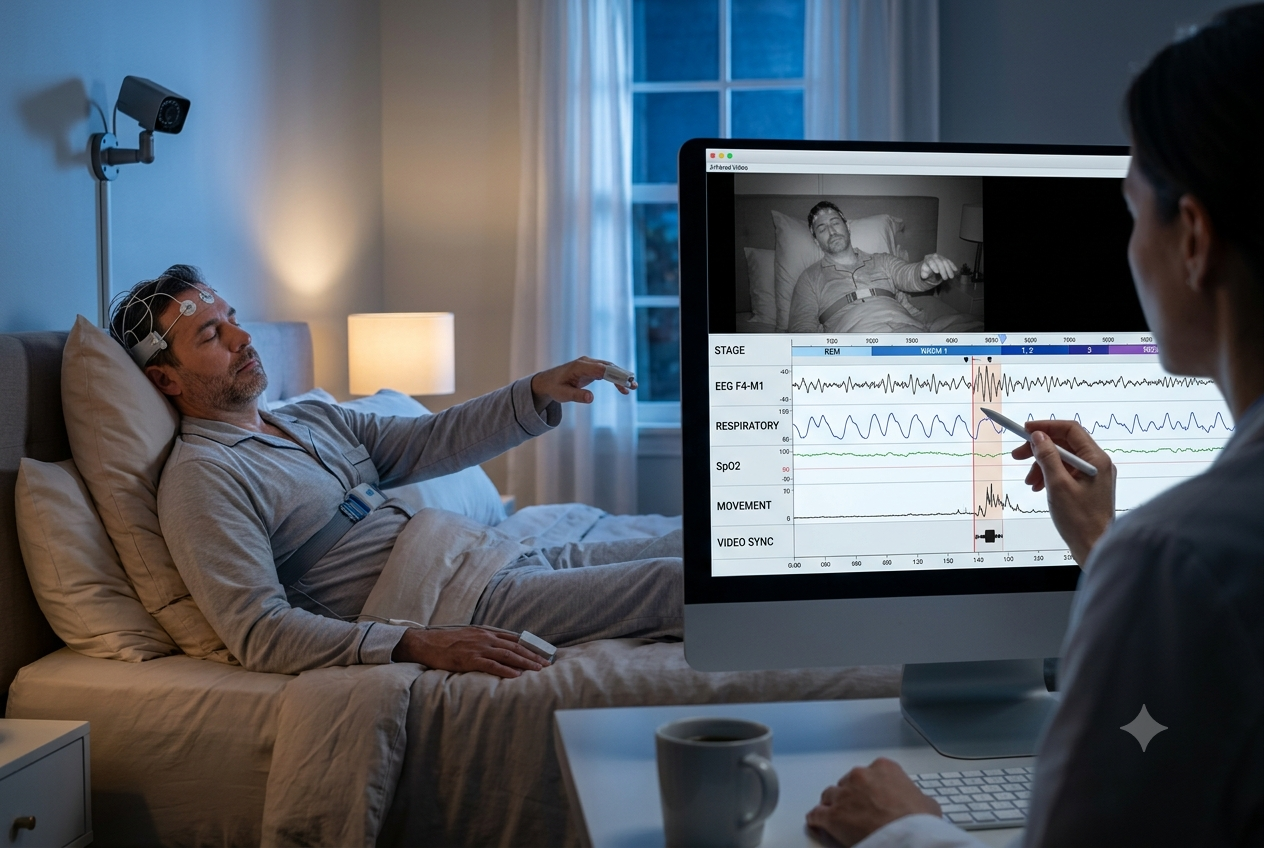
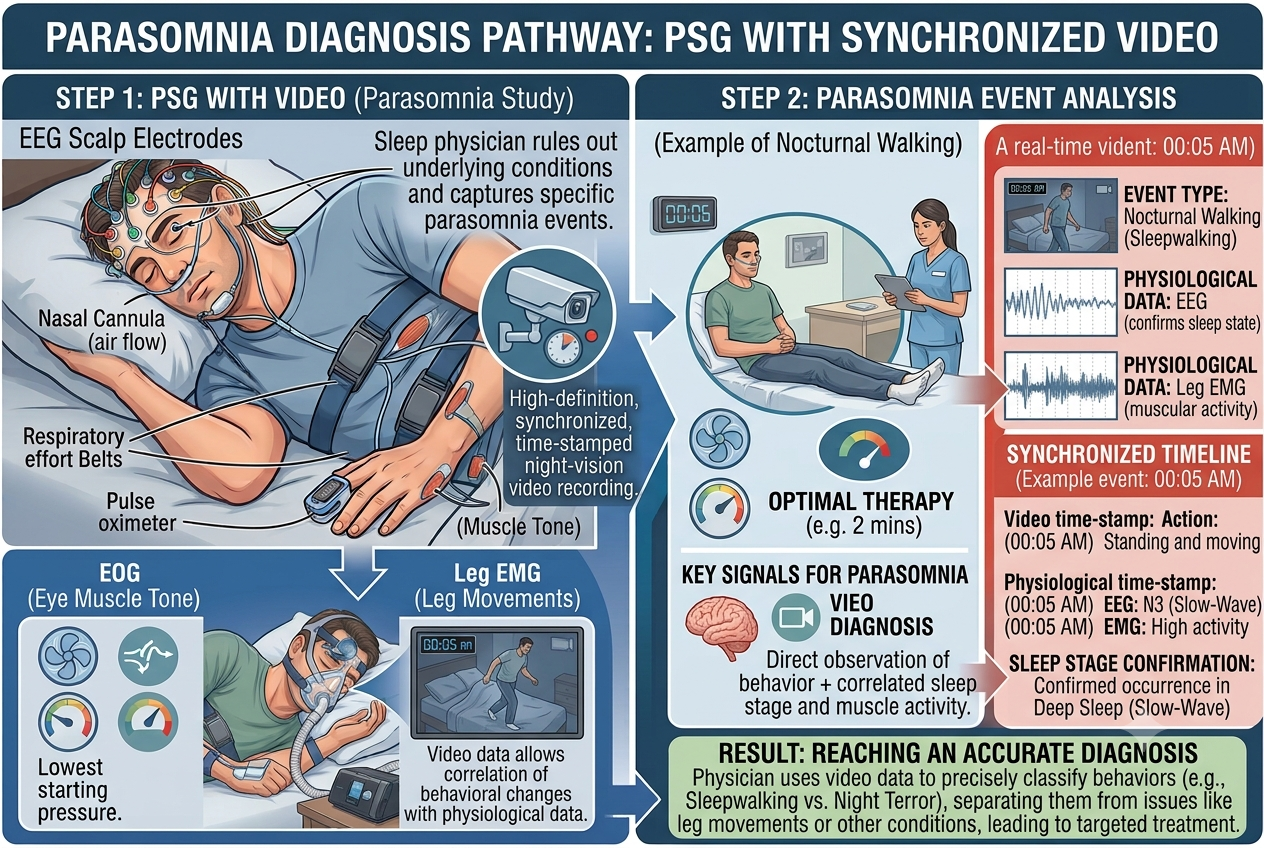
A parasomnia study adds synchronized video recording to the usual breathing, oxygen, and movement sensors, so a sleep physician can see exactly what happened, when it happened, and which sleep stage it occurred in — the detail needed to reach an accurate diagnosis.
Already diagnosed?
Rent a CPAP or BiPAP Machine — No Big Upfront Cost
Flexible monthly rentals with free delivery, setup, and ongoing support, so you can start therapy right away.
REM vs. NREM parasomnias
Where in the night an event happens is itself a diagnostic clue.
NREM parasomnias — early night
Deep-sleep events, most common in children and young adults, usually with no memory of the episode afterward.
Sleepwalking — walking or performing activities while still asleep.
Night terrors — sudden screaming, intense fear, a racing heartbeat.
Confusional arousals — waking in a disoriented, confused state.
REM parasomnias — later night
Dream-sleep events, more common in older adults, usually remembered clearly afterward.
REM Sleep Behavior Disorder — physically acting out vivid or violent dreams.
Nightmares — vivid, distressing dreams recalled in detail.
Sleep paralysis — brief inability to move while falling asleep or waking.
Is this study right for your family?
Frequent sleepwalking or terrors
A child or adult regularly walks, screams, or shows intense fear during sleep with no memory of it after.
Acting out dreams
Punching, kicking, or shouting during sleep in a way that could injure you or a partner.
Unexplained movements
Jerks, talking, or strange nighttime behavior with no memory of it, and no clear explanation yet.
Ruling out seizures
Your doctor wants to distinguish a possible seizure disorder from a sleep-related behavioral event.
How the video study works
Setup at home
Standard sensors plus a compact camera are set up in your bedroom with illustrated guidance.
Overnight recording
Breathing, movement, and video are recorded together through the night as you sleep normally.
Synchronized review
A sleep physician reviews the video alongside the sensor data to classify any events precisely.
Report & next steps
Your report describes what occurred, when, and in which sleep stage, with recommended next steps.
Already diagnosed?
Rent a CPAP or BiPAP Machine — No Big Upfront Cost
Flexible monthly rentals with free delivery, setup, and ongoing support, so you can start therapy right away.
1-Minute Sleep Quiz
Answer a few quick questions to see whether a sleep test could be worth exploring. This is not a diagnosis.
Parasomnia study questions
Both a standard sleep study and a parasomnia study use polysomnography to monitor sleep, but many parasomnia events — walking, shouting, acting out a dream — look similar in raw sensor data alone. A parasomnia study adds synchronized infrared video recording, giving the physician the visual context needed to tell these events apart and analyze them accurately.
Not necessarily, but because RBD in older adults can sometimes precede other neurological changes, physicians recommend it be evaluated properly rather than ignored — most people with childhood-onset parasomnias like sleepwalking have nothing similar to worry about.
Many NREM parasomnias in children become less frequent with age. Testing is most useful when episodes are frequent, intense, or raise safety concerns like leaving the bed or house.
It may be recommended for people who experience frequent, disruptive, dangerous, or unusual behaviors during sleep, particularly when the cause is unclear or the symptoms could be related to another sleep disorder.
It can help evaluate conditions such as sleepwalking, sleep terrors, REM Sleep Behavior Disorder (RBD), confusional arousals, and other unusual sleep behaviors, as well as identify other sleep disorders that may trigger or mimic parasomnia symptoms. A sleep specialist considers the test results alongside your medical and sleep history to reach a diagnosis.
It's generally painless. You'll sleep with several sensors attached to your body and may be monitored by video — the equipment can feel unusual at first, but most people can sleep sufficiently for the study.
It's typically performed overnight. You'll set up the sensors and camera in the evening, sleep through the night while being monitored, and the recording wraps up the following morning.
Recordings are used solely for clinical review by your care team and are handled under the same privacy commitments described in our privacy policy.
That's still useful information. If events are infrequent, your care team may suggest a repeat study or a longer monitoring window to improve the odds of capturing one.
A sleep physician reviews the recorded sleep data and video footage together with your symptoms and medical history to identify the likely cause of the nighttime behaviors and determine whether further evaluation or treatment is needed. Video studies take a little longer to score than sensor-only tests — typically a few business days, since a physician reviews the full recording alongside the sensor data.
What early users are saying
Illustrative feedback shared for demonstration purposes.
Related studies
Narcolepsy Evaluation
Daytime sleepiness alongside unusual nighttime events? This evaluation covers both.
Polysomnography at Home
Want full sleep-stage and breathing data alongside your video study? This is the comprehensive option.
Home Sleep Apnea Test (HSAT)
If breathing pauses are the main concern rather than movement or behavior, start here instead.