How It Works: Decoding Every Type of Sleep Study.
No hospital stay, no overnight clinic visit* — just a device that arrives at your door and a physician who reviews every night's data.
*Only for Level-2 & 3 sleep apnea tests.
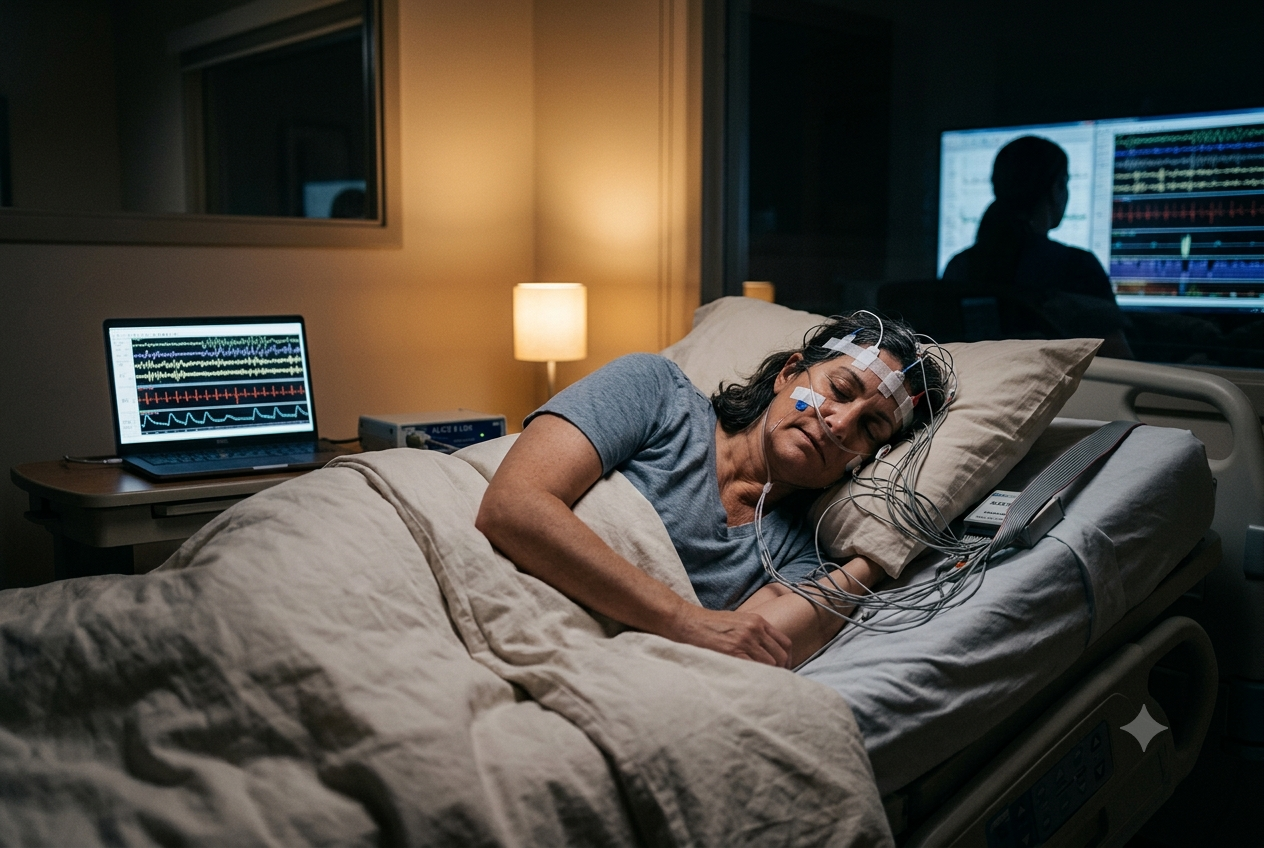
How Sleep Studies Work: Your Guide to Every Test
A home sleep study is an overnight diagnostic test you take in your own bed, using a small take-home device instead of a hospital stay — reviewed by a qualified sleep physician. Here's the full lineup of studies we offer.
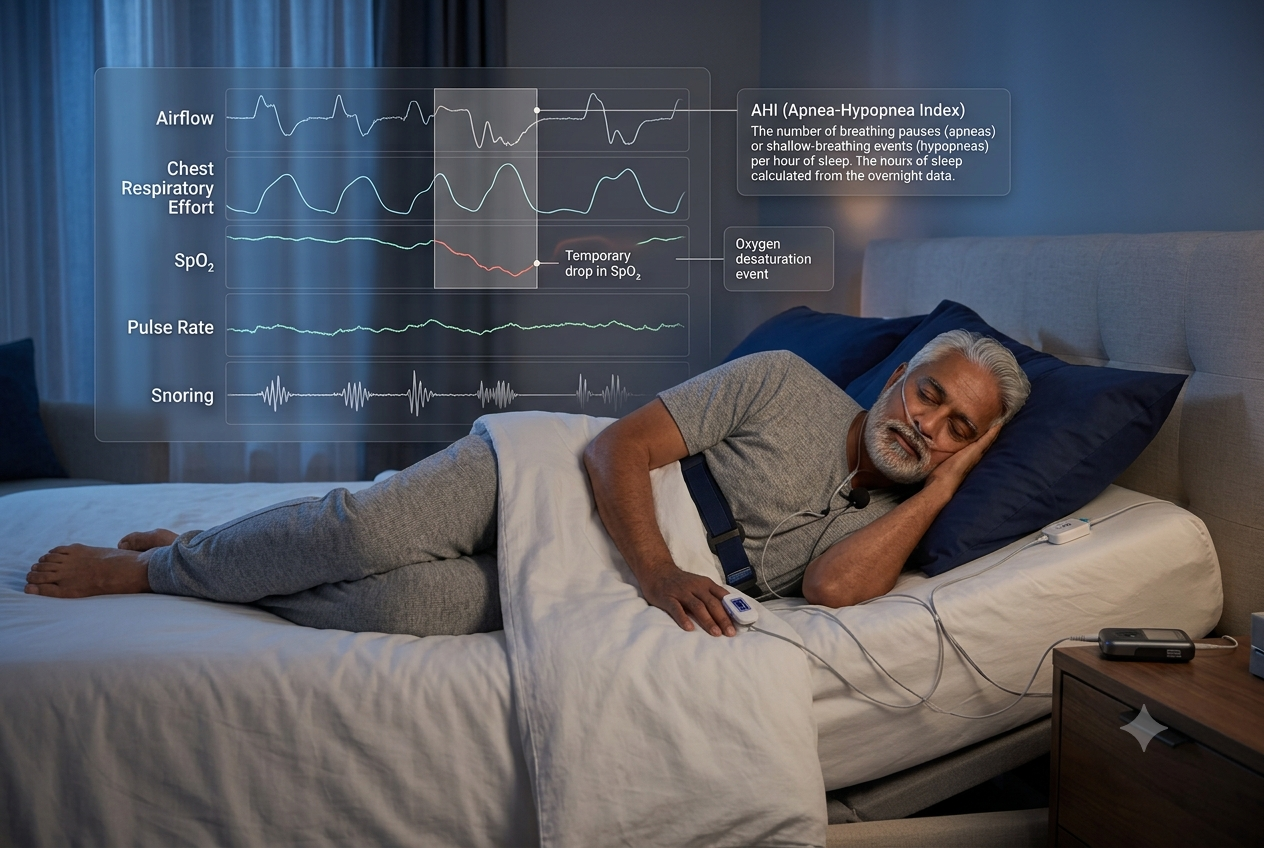
Our most-requested study. An overnight take-home device measures airflow, breathing effort, and blood oxygen levels while you sleep in your own bed — best for a first-time screening.
How to conduct this test:
- Equipment Pickup: Collect the portable testing kit from your healthcare provider's office or book one with us.
- Skin Preparation: Shower before bed but avoid applying any heavy lotions or face creams that might prevent sensors from sticking.
- Apply the Chest Belt: Secure the main diagnostic device around your chest using the provided elastic or Velcro strap.
- Insert the Nasal Cannula: Place the breathing tubes gently into your nostrils and secure the loops comfortably behind your ears to measure airflow.
- Attach the Pulse Oximeter: Slide the small sensor probe onto your fingertip (ensuring no dark nail polish is worn) to track blood oxygen levels throughout the night.
- Power On and Sleep: Turn on the recording console, verify that the sensor lights show a secure connection, and sleep normally in your own bed.
- Return the Kit: Disconnect the gear in the morning, repackage the system, and return it to the clinic for data download and specialist analysis.
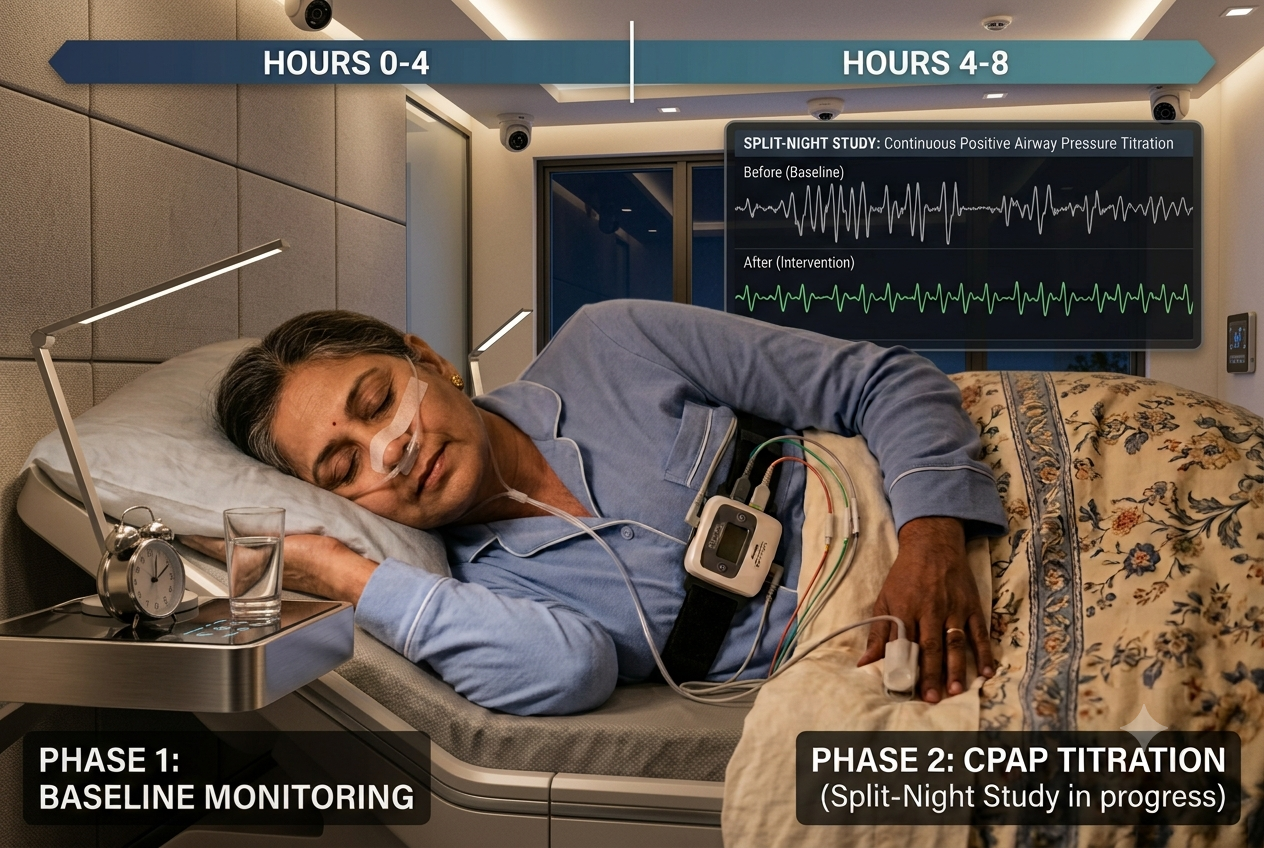
Combines diagnosis and treatment titration into a single monitored night, ideal when you want fewer nights of testing overall.
How to conduct this test:
- Evening Lab Arrival: Check into the specialized sleep lab during the early evening, bringing comfortable sleepwear and toiletries.
- Full Sensor Placement: A technician attaches comprehensive Polysomnography (PSG) monitoring electrodes to your scalp, face, chest, and legs.
- First-Half Diagnostic Phase: Sleep for the first 3 to 4 hours while the staff monitors your baseline breathing patterns and tracks the severity of your Sleep apnea.
- Apnea Threshold Evaluation: If your breathing data reveals severe obstructive Sleep apnea (usually an Apnea-Hypopnea Index of 30 or higher), the technician interrupts the study.
- Second-Half Intervention Phase: The technician enters your room quietly to fit you with a Positive Airway Pressure (PAP) mask.
- Pressure Calibration: Spend the remaining hours of the night sleeping with the machine while the staff remotely adjusts the air pressure to eliminate your airway blockages.
- Morning Awakening: Wake up at the designated time, have the sensors removed, complete a feedback questionnaire, and leave the clinic.
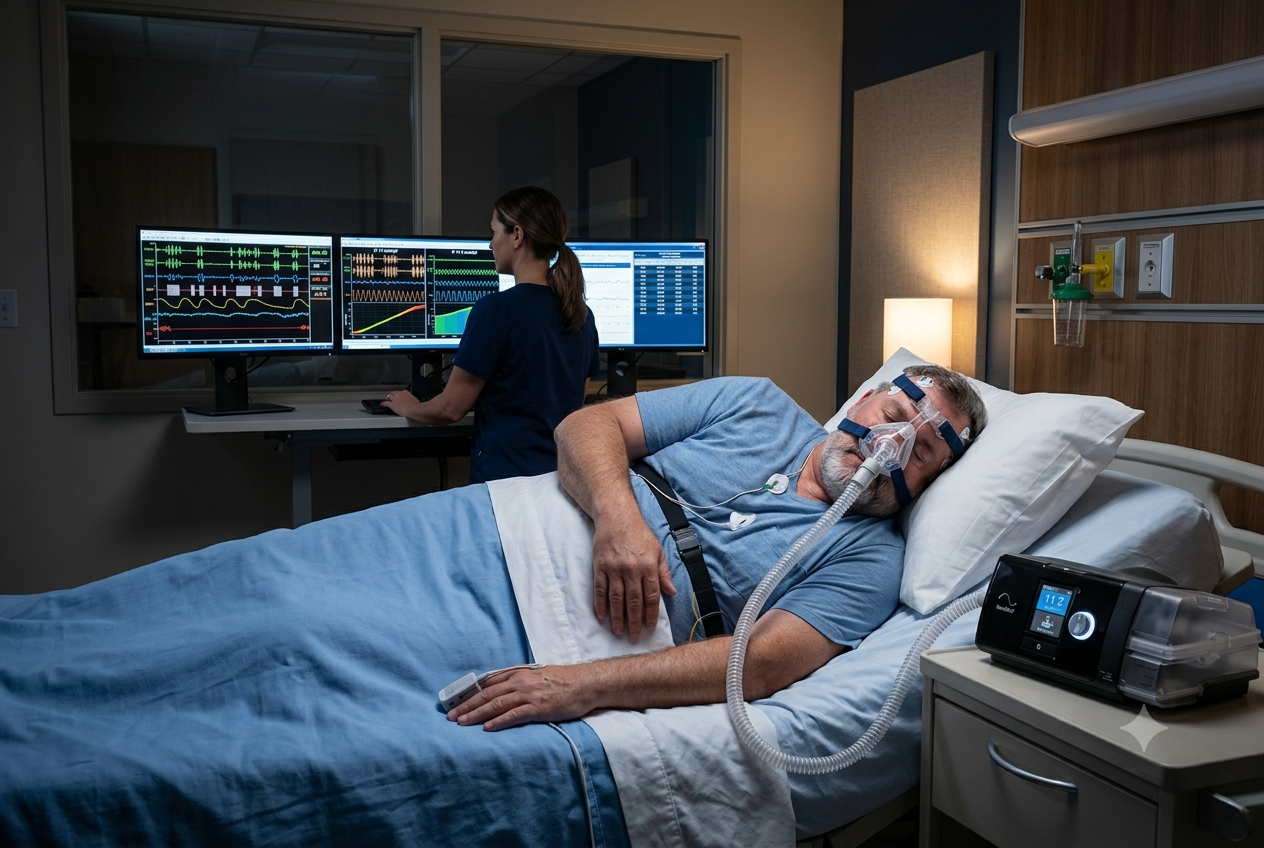
For patients who already have a confirmed Sleep apnea diagnosis, this study fine-tunes therapy pressure settings.
How to conduct this test:
- Pre-Test Consultation: Arrive at the sleep center to test and choose a comfortable Continuous Positive Airway Pressure (CPAP), BiPAP, or ASV mask shape that matches your face.
- Hookup Application: Undergo standard overnight PSG setup with brain wave (EEG), heart rate (ECG), and muscle movement sensors attached to your skin.
- Initiate Device Pressure: Begin the night with the selected mask secured to your face, connected to a machine delivering a low baseline air pressure.
- Remote Incremental Adjustments: As you fall asleep and enter deep REM cycles, the monitoring technologist slowly increases the air pressure dynamically.
- Target Event Elimination: The adjustments continue until all central or obstructive apneas, hypopneas, micro-arousals, and loud snoring behaviors stop.
- Data Consolidation: Sleep at your newly established optimal therapeutic pressure level for the remainder of the night to capture stability metrics.
- Equipment Disconnection: Wake up in the morning, remove the mask and electrodes, and review your final prescription data with the clinic team.
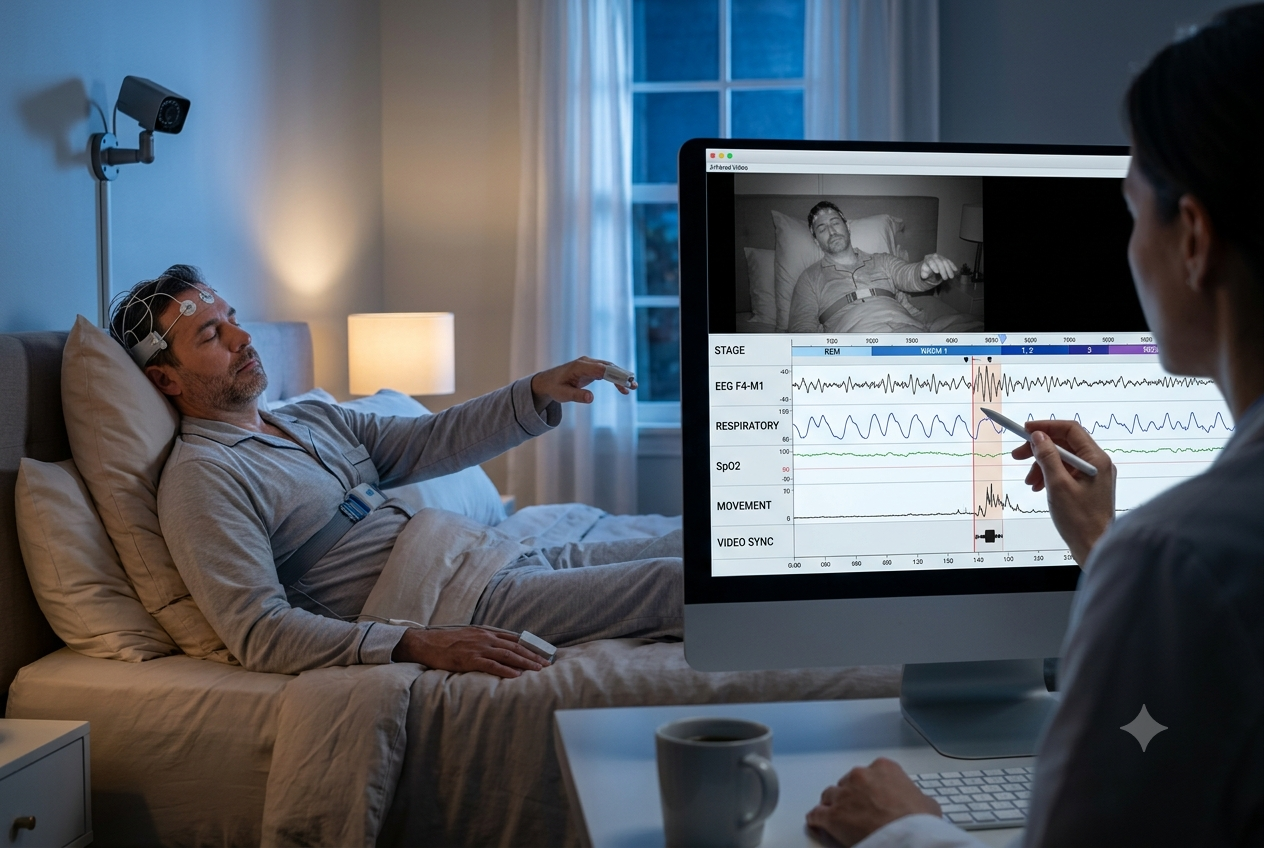
Monitors unusual sleep behaviors — sleepwalking, night terrors, or acting out dreams — using extended movement and audio tracking.
How to conduct this test:
- Intake and Behavioral Interview: Arrive at the center and complete an inventory detailing your specific historical behaviors (e.g., sleepwalking, night terrors, or flailing).
- Expanded Electrode Montage: Technologists place standard PSG sensors alongside additional localized facial and limb EMG electrodes to capture precise muscle contractions.
- Synchronized Video Installation: The technician configures a specialized low-light, high-definition infrared video camera and room microphone pointing directly at your bed.
- Technician Calibration: Complete a physical tracking routine before lights-out (blinking eyes, moving feet) to sync your physical body movements with the computerized log.
- Continuous Active Supervision: Sleep through the night while an on-duty technician continuously monitors the live audio-video feed for any abnormal movements or vocalisations.
- Event Correlation Capture: If an episode occurs (such as an active dream enactment), the system flags the exact time to see if your brain waves match a state of sleep or waking.
- Morning Briefing: Wake up safely, remove the wiring array, and complete an interview detailing if you recall having any dreams or disruptions.
An overnight recording followed by a guided daytime nap protocol (MSLT) at a partner clinic to assess excessive daytime sleepiness.
How to conduct this test:
- Overnight Diagnostic Baseline: Complete a full, supervised 8-hour overnight polysomnography test to rule out other sleep disorders like Sleep apnea.
- Morning Stay-Behind: Wake up at the standard time, remove the body bands, but keep the core scalp EEG and facial electrodes securely attached to your skin.
- First Scheduled Nap Trial: Exactly 1.5 to 2 hours after your morning wake-up, enter a dark room and lie down for a 20-minute nap opportunity.
- Latency Tracking: The system measures the exact amount of time it takes you to fall asleep (Sleep Latency) and checks if you enter REM sleep immediately (SOREMPs).
- Forced Wakefulness Interval: After 20 minutes, the technician wakes you up and requires you to stay completely awake in a well-lit room for the next 2 hours.
- Repeat the Nap Cycle: Repeat this exact 20-minute nap and 2-hour wakefulness routine 4 more times throughout the day (totaling 5 distinct nap windows).
- Final Calculation: Complete the final nap loop in the late afternoon, have all remaining head electrodes removed, and discharge from the unit.
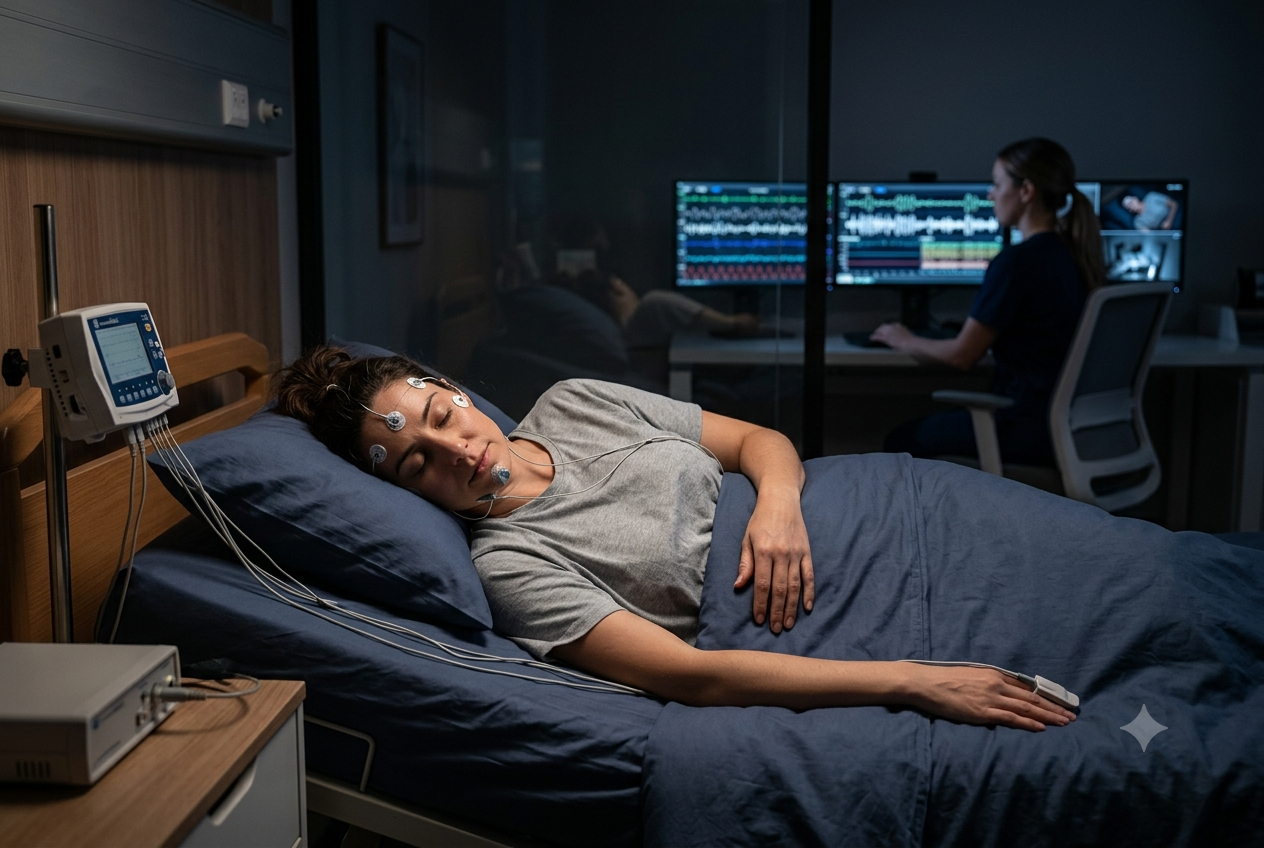
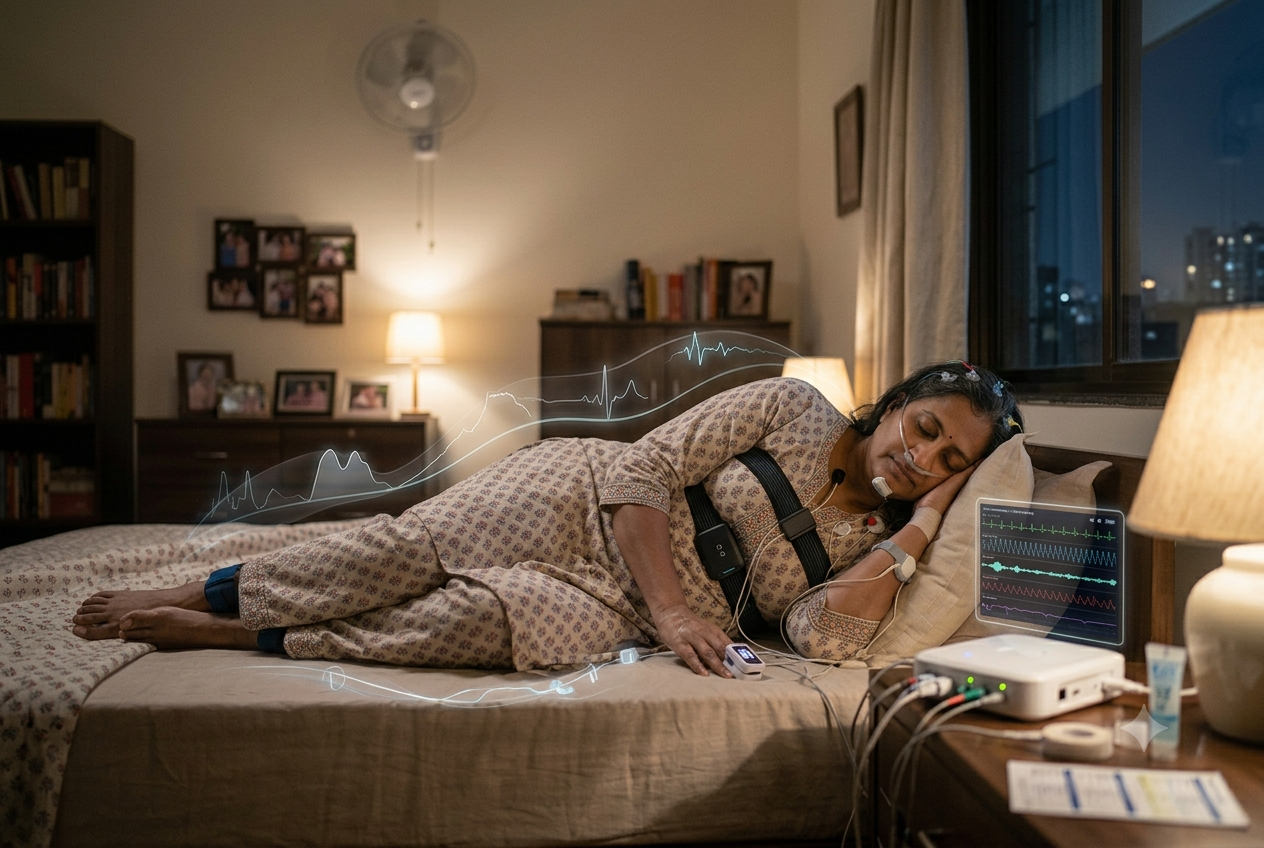
The most comprehensive home study — full breathing, oxygen, heart-rhythm, and sleep-stage data in one night.
How to conduct this test:
- Clinical Device Fitting: Visit the sleep clinic during the afternoon where a certified technician attaches a comprehensive medical-grade electrode array to your body.
- Scalp and Face Sensor Application: The technician glues EEG electrodes to your scalp to track sleep stages, along with eye and chin sensors (EOG/EMG) to identify REM cycles.
- Torso and Limb Preparation: Technologists apply heart tracking stickers (ECG), breathing bands around your chest and abdomen, and leg movement sensors.
- Portable Pack Securement: All trailing sensor wires are neatly bundled and plugged into a small, battery-powered recording pouch strapped to your body.
- Travel Home Safely: Travel back to your home residence, avoiding any physical activities or moisture that could loosen the medical adhesives.
- Nighttime Data Logging: Plug in your finger pulse oximeter and nasal cannula right before getting into bed, then sleep through your regular nighttime routine.
- Morning Removal and Drop-off: Peel off the sticky patches gently in the morning, place the complete portable console back into its carrying case, and drop it off at the lab.
Already diagnosed?
Rent a CPAP or BiPAP Machine — No Big Upfront Cost
Flexible monthly rentals with free delivery, setup, and ongoing support, so you can start therapy right away.
What is Sleep apnea, really?
Sleep apnea is a common, potentially serious sleep disorder where your breathing repeatedly stops and starts while you sleep. This prevents your body from getting the deep, restorative rest it needs, leaving you exhausted and at risk for other health complications.
Health Risks of Sleep Apnea
Heart Disease
Increases risk of high blood pressure, heart attack, and stroke.
Stroke
Sleep apnea can reduce oxygen levels and increase stroke risk.
Diabetes
Sleep deprivation and poor oxygen levels can worsen insulin resistance.
Daytime Fatigue
Poor sleep quality leads to chronic fatigue, lack of focus, and irritability.
Mental Health
Increases risk of anxiety, depression, and mood disorders.
Weight Gain
Sleep apnea can disrupt hormones that regulate appetite and weight.
Already diagnosed?
Rent a CPAP or BiPAP Machine — No Big Upfront Cost
Flexible monthly rentals with free delivery, setup, and ongoing support, so you can start therapy right away.
Sleep study questions
You do not need a perfect night of sleep to get accurate results. Doctors only need a few hours of recorded sleep data to analyze your breathing patterns and brainwaves. If you struggle significantly, technicians can sometimes administer a mild, pre-approved sleep aid.
Yes, you can freely move, turn around, and switch sleeping positions. The wires are bundled together into a single flexible cable with plenty of slack. If a sensor accidentally detaches while you roll over, the monitoring technician will gently reattach it.
You simply need to state aloud that you need to use the restroom. The sleep lab room has a microphone, and the technician tracking your data will come in to temporarily unplug the main cable block, allowing you to walk freely.
An in-lab study (polysomnography) tracks brainwaves, muscle activity, and sleep stages to diagnose various complex disorders like narcolepsy or restless leg syndrome. An at-home test is a simplified version that only monitors breathing and oxygen levels, primarily used to confirm standard obstructive Sleep apnea.
Caffeine and daytime napping alter your natural sleep architecture and reduce your "sleep debt". This makes it much harder to fall asleep in an unfamiliar environment and can skew the data regarding how quickly you enter deep or REM sleep stages.
No, the paste and adhesives used to secure the scalp electrodes are completely water-soluble. They are designed to wash out easily with regular shampoo and warm water during your morning shower, leaving no permanent residue.
The AHI score is the average number of times your breathing pauses (apnea) or partially blocks (hypopnea) per hour of sleep. A score under 5 is normal; 5 to 15 indicates mild Sleep apnea; 15 to 30 is moderate; and any score over 30 signifies severe Sleep apnea.
Only if you are undergoing a "split-night" study. In these sessions, if severe Sleep apnea is detected during the first half of the night, the technician will introduce the CPAP mask during the second half to find your correct airflow pressure settings.
Yes, sleep centers encourage patients to bring personal items like their own pillows, books, and comfortable sleepwear to recreate their usual bedtime routine. You should check with the clinic beforehand regarding white noise machines or fans.
It typically takes between one to two weeks to receive your results. A registered sleep technologist must manually review and score thousands of pages of continuous overnight data before a sleep specialist interprets the data to create your final treatment plan.